
My suitcase is still sitting on the bedroom floor. I’m 36 hours home from a 24-hour journey and have absolutely no ambition to unpack. But if there’s one thing I am qualified to do right now, it’s to tell you what not to pack.
This past month has been a travel bender: an outdoor media conference in Asheville, the Italian Dolomites and Slovenia for my husband’s 40th birthday, a work trip to Türkiye two weeks later and a rain-soaked camping weekend in Fruita, with Halloween squeezed in between. I barely unpacked one bag before packing another.
Despite researching packing lists, studying my closet and convincing myself I had a reasonably sound strategy, the reality was a little less polished. After each trip, I stared into my suitcase of the clothes I never wore, the layers I wish I brought and the gear that earned its place.
So consider this my post-trip packing debrief: what worked, what didn’t and what I would do differently.
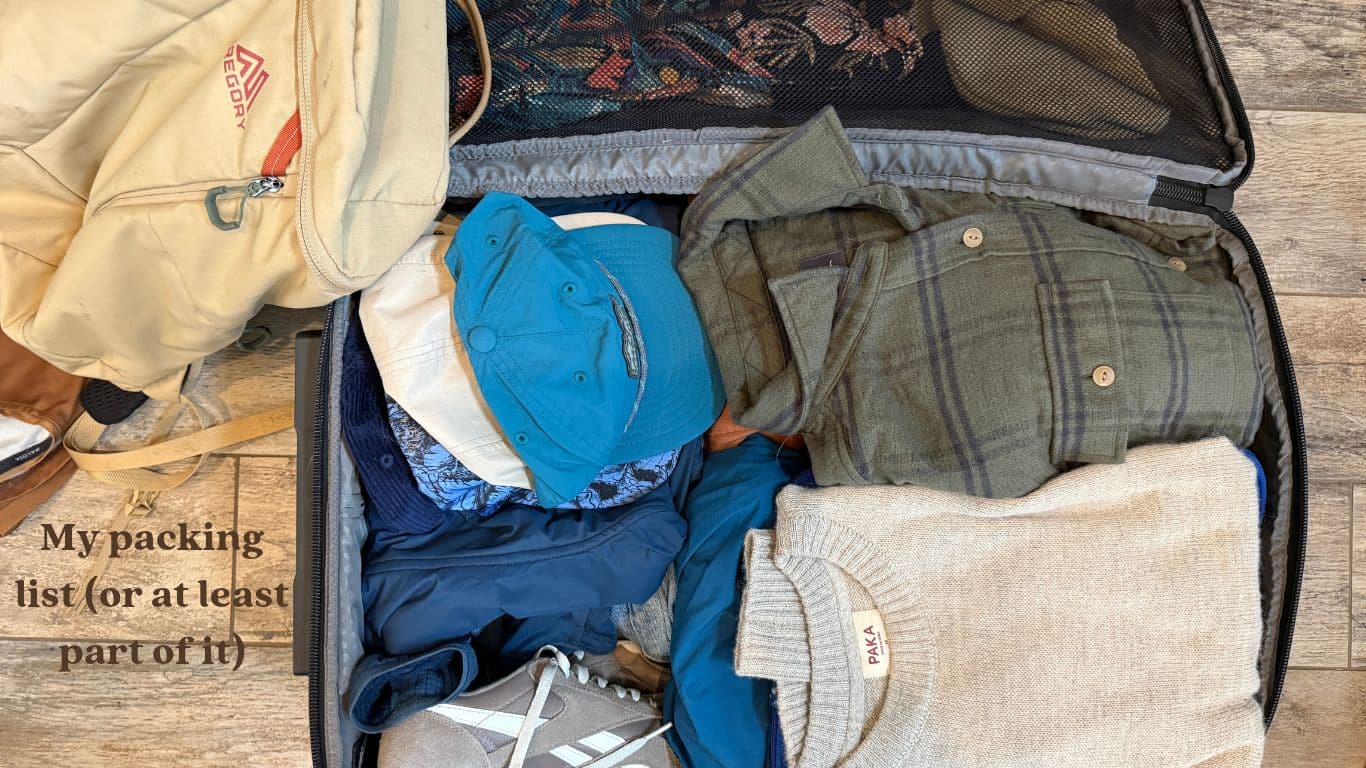
Packing Lessons From the Clothes I Left Behind
Every time I lay out piles of clothes before taking a trip, I have the same thought: I totally nailed it. But somehow, I never do. Here are a few guidelines that helped.
- Basics Beat Statement Pieces
A suitcase full of possibilities starts with hardworking neutrals. My signature style leans heavily into embroidery, florals and vintage flair. I love a statement jacket, but that’s not the most compatible travel companion.
For Slovenia, I nearly packed an olive-green floral jacket that, in my mind, was basically a neutral. Instead, I reached for an oversized cream denim chore coat, which worked with everything in my bag and had enough to layer underneath.
The lesson? Build your wardrobe around versatile basics, then sprinkle in personality.
- Accessories: Small Items, Big Impact
The easiest way to change your outfit without changing your packing list? Accessories. And they take up much less suitcase space.
Instead of packing separate daytime and nighttime outfits, I think about transforming the same piece with a few strategic additions.
My usual suspects:
– Hats: Baseball hats and beanies.
– Scarves: Smaller ones to tie around your neck, plus an oversized scarf that doubles as a plane blanket or extra layer.
– Jewelry: Statement rings are my usual uniform, but oversized earrings or a dramatic necklace can completely change an outfit.
- Fabric Is the Real MVP
Packing isn’t just about the outfits. It’s about the fabrics.
Natural fibers like merino wool and alpaca are useful for travel because they’re breathable, help regulate temperature and naturally resist odors, which is ideal for pieces you might wear multiple days (or your whole trip) before washing.
- Cohesive Color Palette
Make everything in your suitcase play nicely together.
Sticking to a cohesive color story is the easiest way to make everything work harmoniously. For me, I leaned into creams, browns, blues, olive green and burnt orange, with pops of color in my accessories. Personally, I love a bright cherry red.
The Packing MVPs: Gear That Earned Its Keep
After all my trips, a few technical pieces stood out. These are the pieces I wore repeatedly, pulled for multiple trips and would pack again without hesitation.
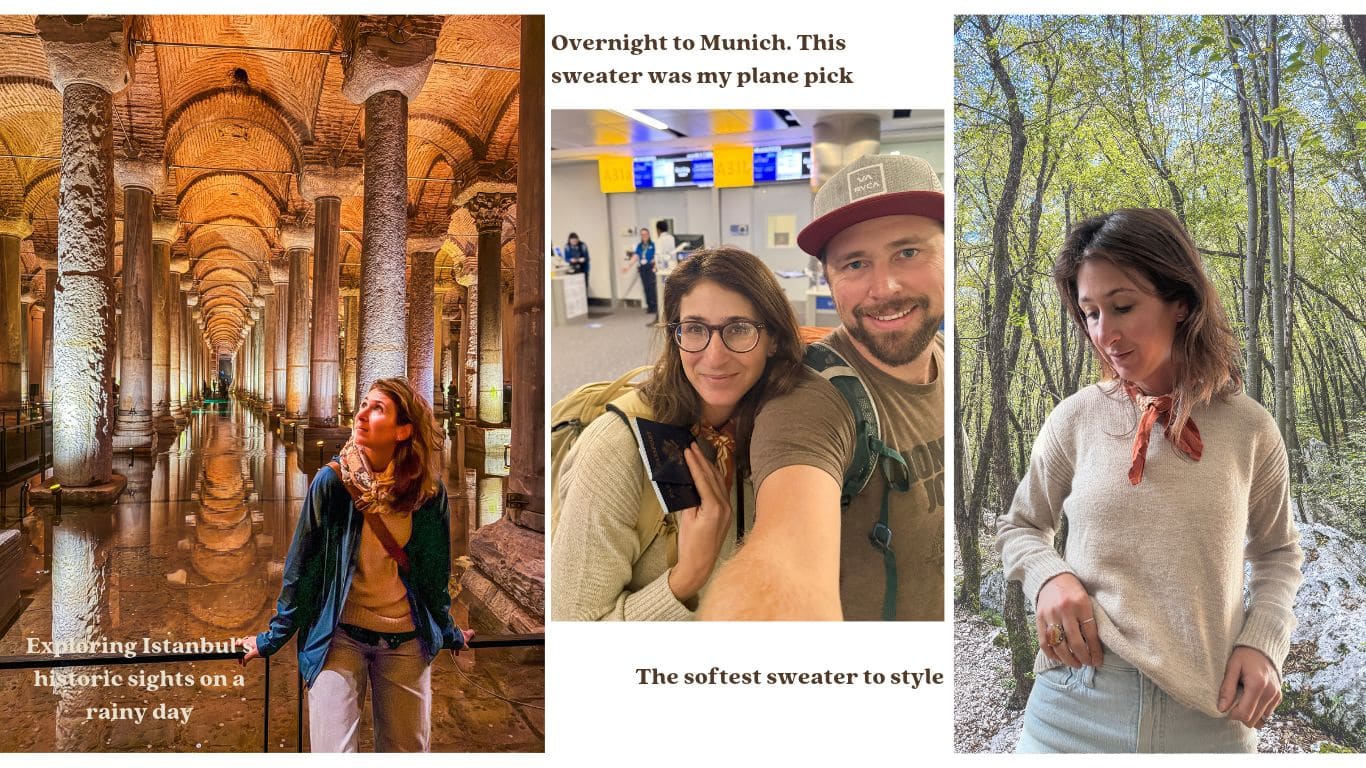
PAKA Sweater: The One Sweater Strategy
The softest sweater I own is an alpaca blend and one of the most useful travel pieces in my wardrobe.
The PAKA Women’s Original Crew Sweater was the only sweater I packed for multiple trips. That’s an impressive accomplishment for a garment competing against my entire closet.
Woven from alpaca fibers by Peruvian artisans, it’s lightweight but surprisingly warm. Alpaca’s semi-hollow fibers help trap insulating air, delivering warmth without the bulk of a heavier sweater. The natural fibers are also breathable and moisture-wicking, helping regulate temperature and resist odors.
I packed a soft pebble color, a versatile, neutral that worked on its own, layered over a button-up, or under a jacket. For travel, one versatile, natural fiber layer that earns multiple days of wear hits the sweet spot.
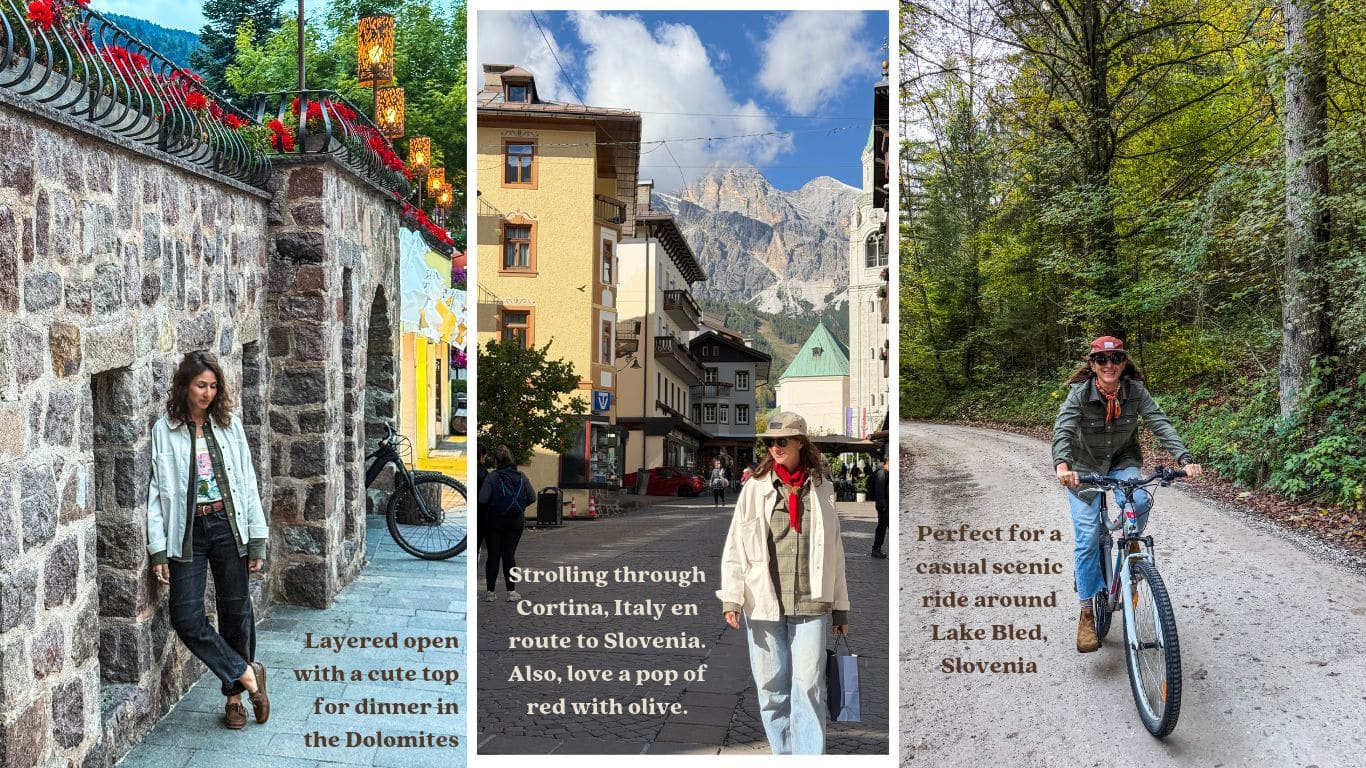
Ridge Merino Flannel: The Flannel Jacket
A flannel is a casual staple that I bring everywhere. But this heavyweight merino one doubles as an overcoat.
The Ridge Merino Women’s Treeline Flannel Overshirt is a merino wool and Tencel blend in a boxy, oversized fit. At 275 GSM (grams per square meter), it’s heavyweight and structured. Many light to mid-weight shirts fall around 130-170 GSM, so this one feels more like a work shirt than a thin button-up.
I wore it buttoned as a shirt and open over a tank or tee as an overshirt. The roomy fit made layering easy, while the heavier fabric added warmth. Overshirts are particularly useful in travel: substantial enough to wear alone on mild days, easy to layer when the temperature drops. Merino adds breathability and odor resistance, too.
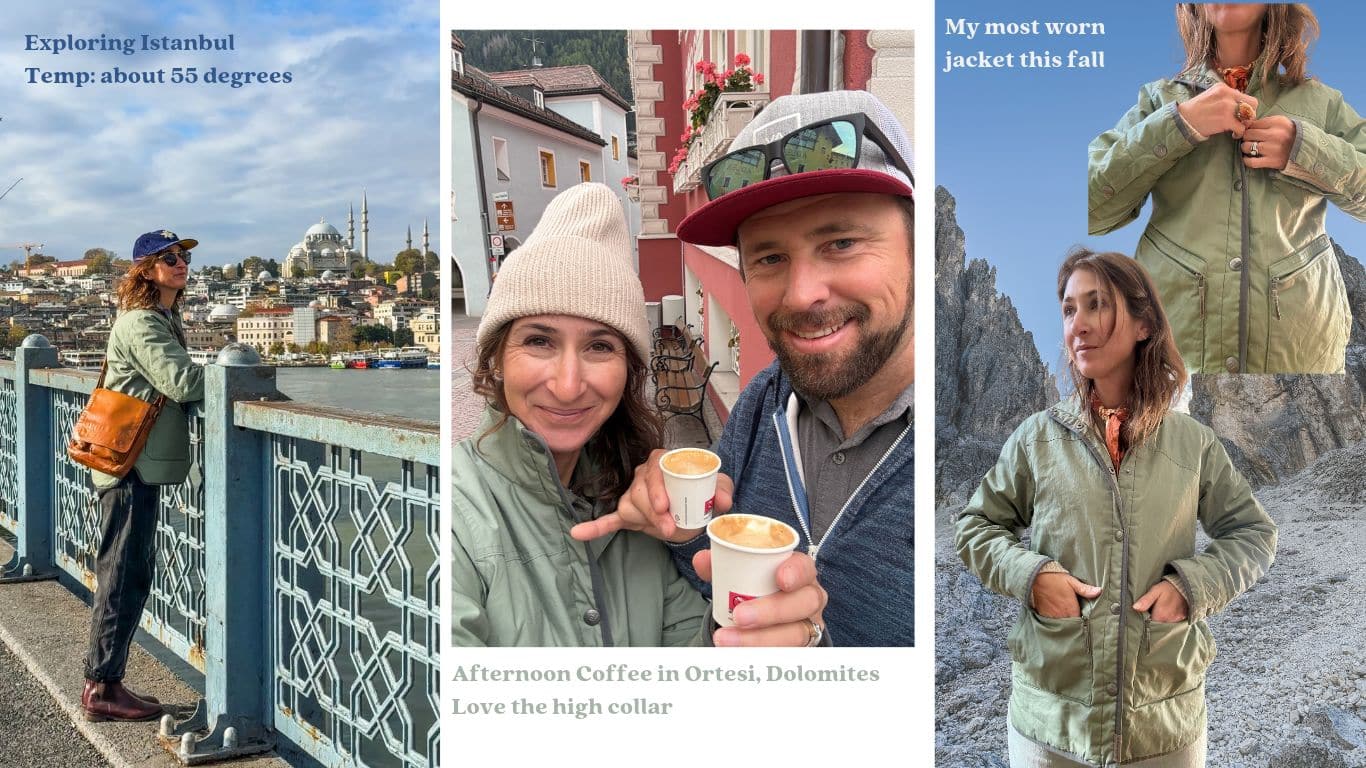
Forgeline Jacket: A Utility Jacket With a Serious Style Upgrade
In cooler climates, the one piece of clothing you’ll see in every photo: your jacket. So it needs to be a piece that looks good and works hard.
The Forgeline Zaca Ridge Insulated Utility Jacket has accompanied me everywhere this fall, from Asheville to Europe to Türkiye.
The relaxed chore-coat fit, drop-tail hem and clean silhouette make it feel like more of an overcoat than technical outerwear. But the waxed cotton exterior repels light rain and cuts wind, while PrimaLoft Gold insulation made from 100% recycled materials adds warmth without excessive bulk.
Four pockets stash essentials and the high collar protects against chilly wind. The only thing missing is a hood, which might ruin the silhouette anyway.
This is my favorite kind of outerwear: practical enough for unpredictable weather, polished enough for city wandering and versatile enough to work across destinations. After multiple trips, it’s officially earned its place in my fall travel (and everyday) wardrobe.
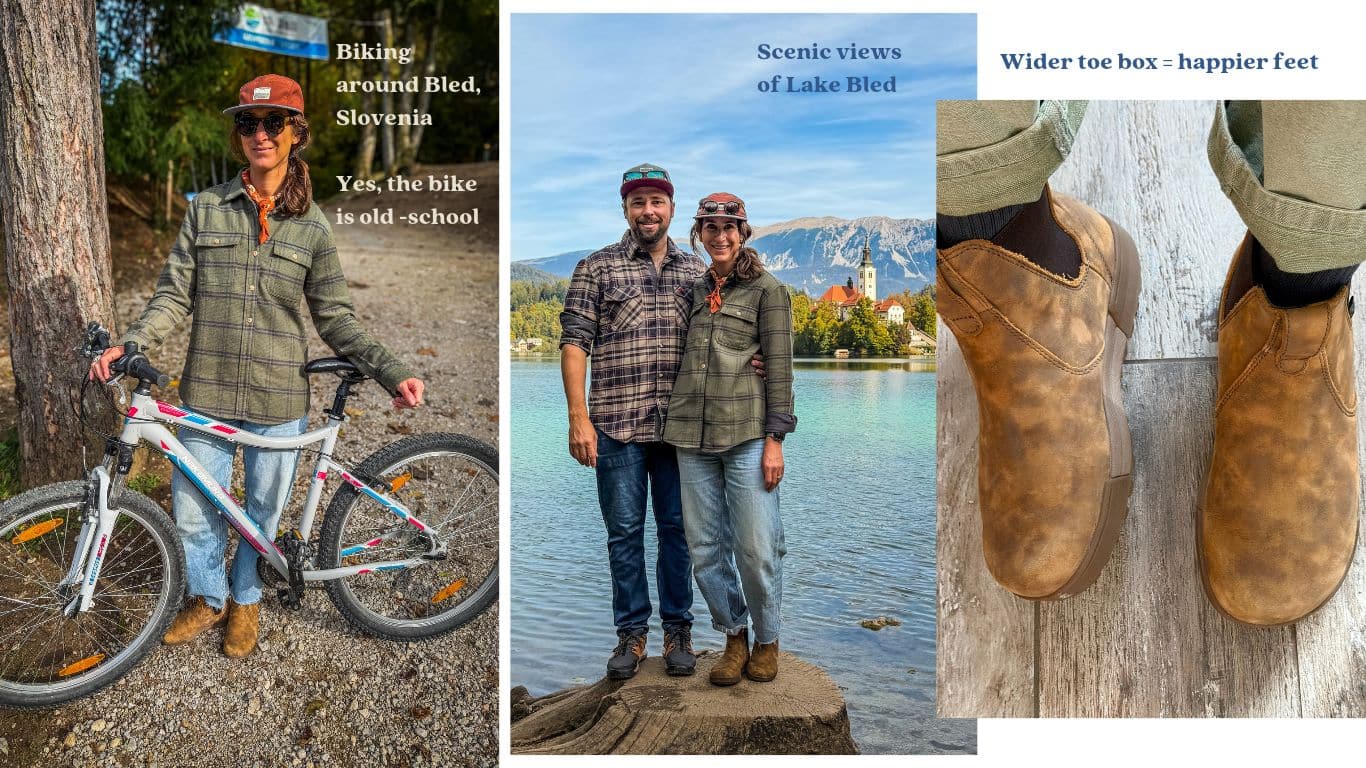
Lems Chelsea Boots: A Wide-Toe Boot That Looks Polished
Packing shoes is usually straightforward: sneakers, flats, Chelsea boots. Mine tend to come in different shades of brown. But traditional boots often have a sleek, tapered toe box in an almond or pointed shape that squeezes your toes together, a recipe for discomfort when you’re logging long days on your feet.
The Lems Chelsea Boots take a different approach. Designed around the natural shape of your foot, their wide toe box lets toes spread instead of getting crammed together. After multiple 20,000-step days, my feet were noticeably happier than in my usual boots. The full-rubber outsole also provided solid grip on uneven surfaces.
The water-resistant leather adds a rugged, understated vibe that works equally well for anywhere from alpine villages to European cities.
Lems are zero-drop, meaning the heel and forefoot sit at the same level rather than elevating your heel. While minimalist footwear can encourage a more natural foot position, everyone’s feet are different. Mine are flat, so I use slim insoles for arch support, even if that somewhat defeats the barefoot philosophy. Ultimately, you need to do what’s best for your body.
For travel, a comfortable boot that looks polished without sacrificing function is a pretty compelling combination.
Bonus Gear:
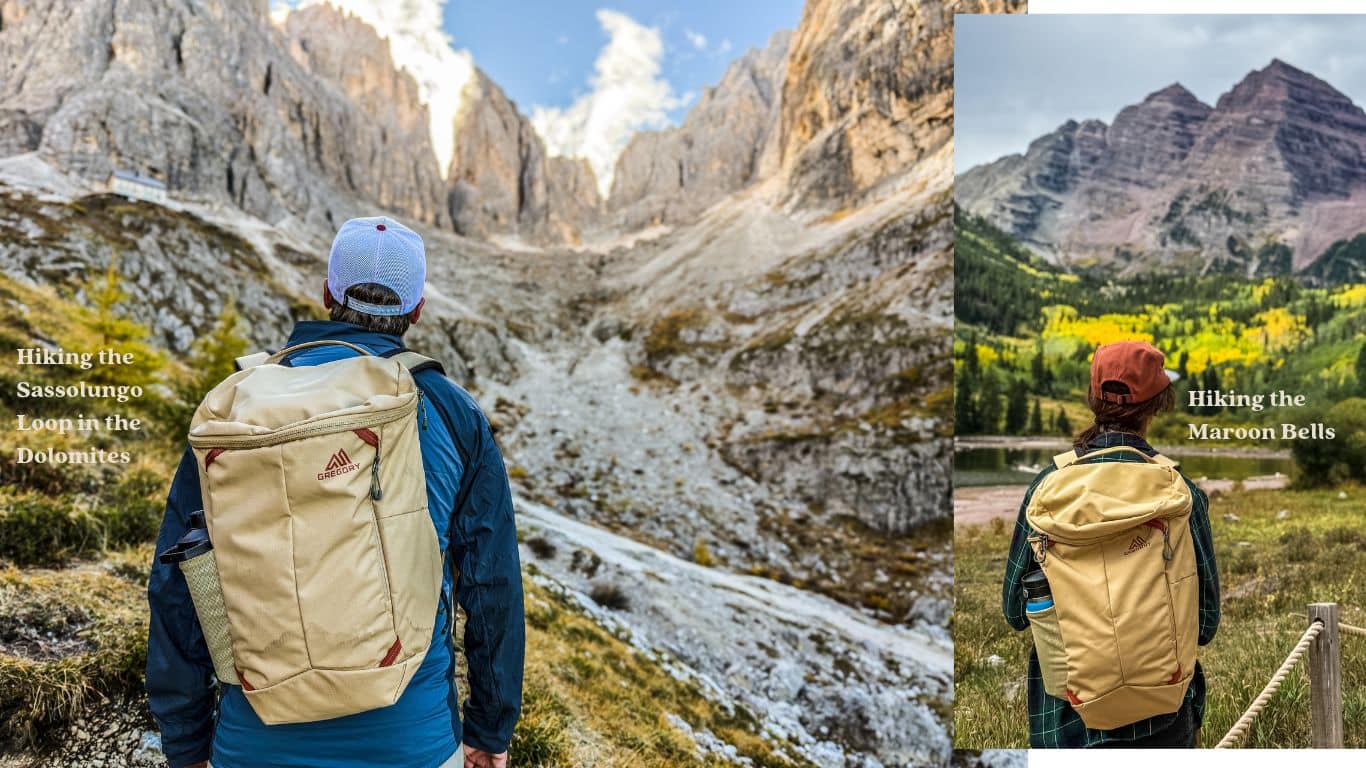
Gregory Backpack: Organization for Travel, Comfort for Wandering
My husband and I have a lot of backpacks, but the one we fought over on our last trip was the Gregory Rhune 25. Luckily, I won.
Multiple interior and exterior pockets keep everything organized, from my laptop and Kindle to snacks and sunglasses. Oversized quick access pockets, smaller interior mesh zippered compartments and a laptop sleeve make it equally useful for airport days and exploring. The U-shaped main opening makes digging around easy, while the stretch mesh water bottle pocket accommodates my always-hydrated self.
A padded shoulder harness and breathable back panel make it comfortable enough for hiking through the Dolomites. There’s a chest strap but no hip belt, which is actually a plus for travel: fewer dangling straps to contend with.
At 25 liters, it’s a practical size for a daypack that can double as a personal item. Plus, I love the small pops of orange on the sand-colored pack.
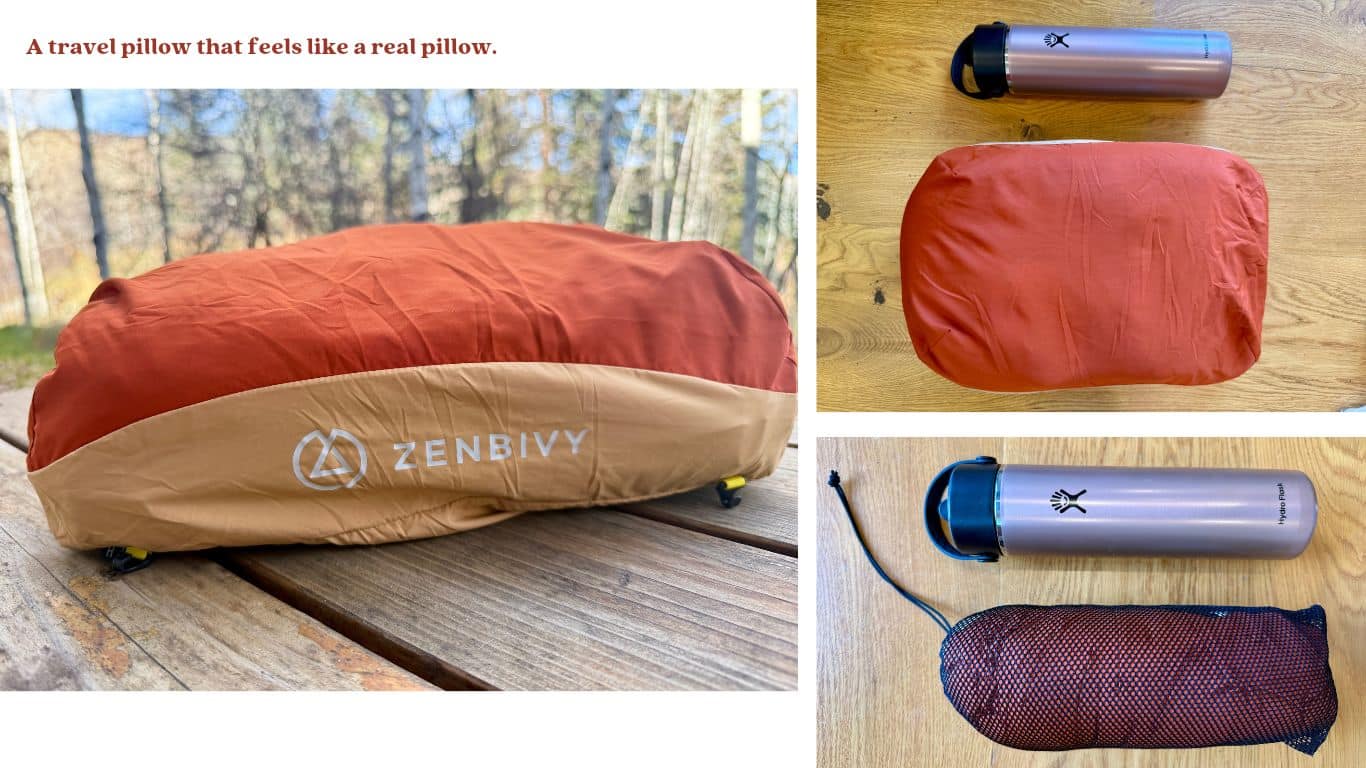
Zenbivy Soft Top Pillow
My husband says my superpower is sleeping. He’s not wrong. But even someone who can fall asleep anywhere appreciates a decent pillow.
I discovered this the hard way during Helly Hansen’s Summit Sleepover on Vail Mountain. Since having kids, I rarely backpack, so a travel pillow wasn’t on my radar. One night of using a sleeping bag stuff sack filled with my down jacket as a pillow was enough to convince me otherwise.
The Zenbivy Soft Top Pillow has since accompanied me as a camping pillow in Fruita to a surprisingly comfortable lower back rest for long-haul flights. Its hybrid design pairs an inflatable bladder with a plush pillow topper. Inflate the bladder to your preferred height and firmness (I’m usually a little less than full), then tuck both inside the soft pillowcase. The topper adds cushioning that feels much closer to a pillow at home than a typical inflatable.
It’s not the tiniest travel pillow on the market, but both pieces roll up and compress into a water-bottle-sized stuff sack. For camping, flights or anywhere questionable pillows could be present, the extra comfort is worth the space.
