
What’s in a name? Sometimes, as in Gore, a wealth of lore! Framing the Vail Valley on its eastern border, the elegant and rugged Gore Range offers a familiar landmark view for locals and visitors from around the world. Gore Creek tumbles westward beneath Vail’s Covered Bridge, then joins the Eagle River en route to the Colorado. Gore Creek Trail climbs from East Vail to pristine Gore Lake, revealing vistas of alpine grandeur, including mountain goats. Gore Pass crosses the northern edge of the Range, connecting Kremmling and Toponas. This Pass facilitates access to several 13er climbs including the highest, Mt. Powell, at 13,556 feet. Gore Canyon, just southwest of Kremmling, is a steep, 3-mile gorge cradling the Union Pacific Railroad on the upper Colorado River in Grand County, a haven for whitewater challenges. Vail’s Gore Creek Drive and Manor Vail’s former Lord Gore Club Restaurant (currently The Fitz Bar and Restaurant) share this famous namesake roster.
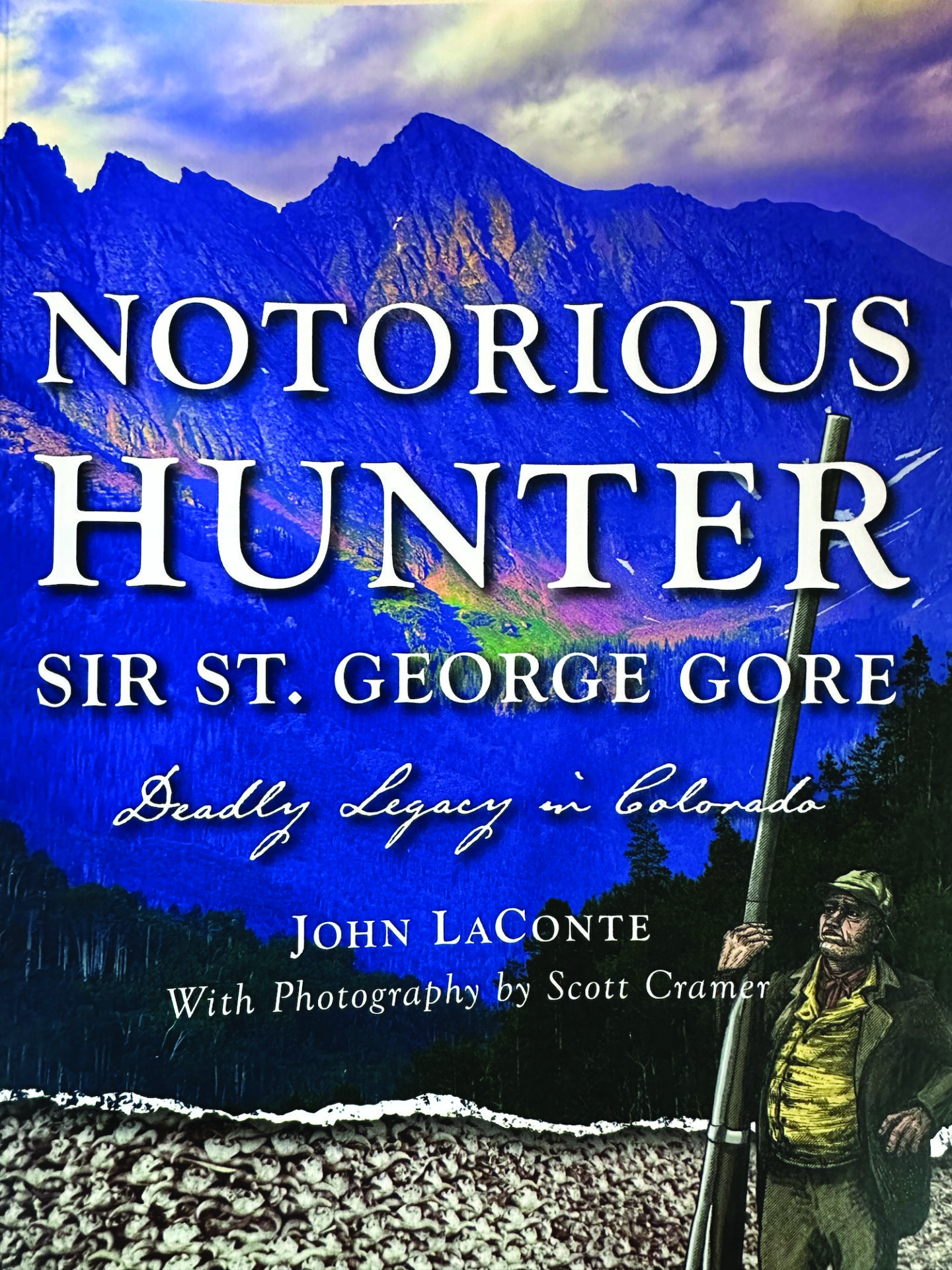
So who was the infamous, extravagant Anglo-Irish baronet, Lord Gore? What eccentric life created the mystique behind his name? John LaConte’s debut book, Notorious Hunter Sir St. George Gore: Deadly Legacy in Colorado, tells the story and sets the record straight in an engaging read that unfolds like a novel. History buffs, especially of Rocky Mountain U.S. regions, will devour these pages and gain knowledge of the controversial character. Two previous books featured Gore, but both contained conjecture, skeptical claims and subjective detail reporting, bordering on historical fiction rather than pure nonfiction. As a professional investigative journalist at Vail Daily, LaConte committed to publishing a definitive and accurate account. The availability of modern, digitized information enabled him to confirm facts and remedy false rumors.
“Gore’s U.S. hunting expeditions and his reasons for pursuing them are my main focus for the book,” LaConte explains. “He was a hunting legend himself, mainly [in] Scotland, before arriving in Canada and the U.S. He was truly a wealthy tourist here seeking recreation.”
LaConte believes that Gore’s primary motivation was to fulfill a personal odyssey. He was smitten with Greek mythology, even naming his hunting dogs after Greek heroes, so he likely craved his own quest. Certainly, Gore’s obsessive ego substantiates this idea. His self-serving nature diminished his integrity, but elevated his fame.
Originally, Gore Pass existed as a rudimentary trail traversed by wildlife and Indigenous peoples. Gore sought to hunt massive numbers of prime game on both sides of the pass, and so he built a primitive road to expand the trail to transport his equipment. By suiting his selfish purpose, he benefitted natives and future settlers, establishing an essential route traversing this remote mountain territory. Today, it remains a popular, scenic shortcut.
Certainly no saint, and despite his rampant slaughter of birds and beasts and his self-indulgent nature, Gore befriended famous trailblazers like Jim Bridger and William “Buffalo Bill” Cody. In constructing Gore Pass, he made a significant contribution to Colorado settlement.
An unresolved debate lingers today … should Gore landmarks be renamed considering his questionable reputation? LaConte’s book provides the first resource to evaluate his life with true objectivity. A must-read.
Each day, the Gore Range greets the sunrise over the Vail Valley and bids farewell in sunset afterglow. These mountains will endure. Will their name fare as well? Time will tell.
